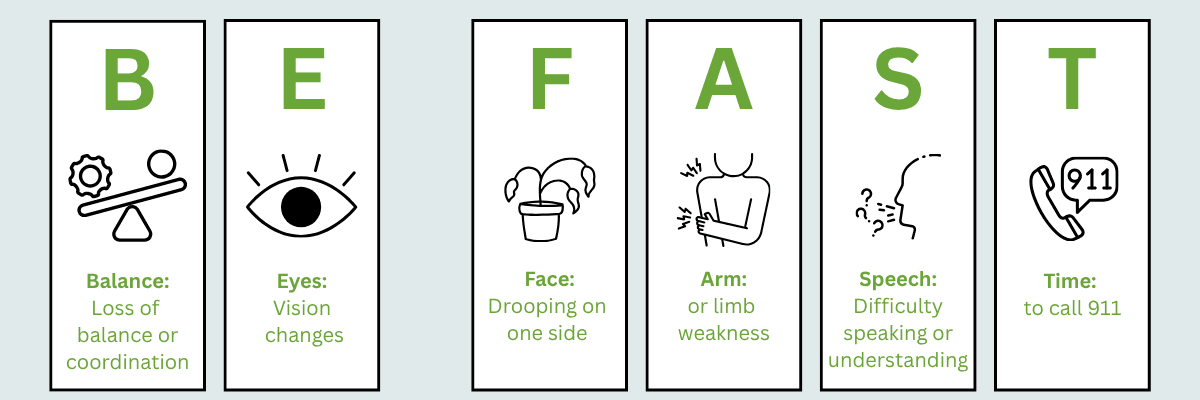
Remember B.E. F.A.S.T. to Recognize the Signs
B – Balance: Sudden loss of balance, coordination, or dizziness
E – Eyes: Sudden trouble seeing in one or both eyes
F – Face Drooping: One side of the face droops or feels numb. The smile may appear uneven.
A – Arm Weakness: One arm feels weak or numb, or drifts downward when both arms are raised.
S– Speech Difficulty: Speech is slurred, hard to understand, or difficult to produce clearly.
T – Time to Call 911: If any of these signs are present, call 911 immediately.
Other possible symptoms include sudden confusion, difficulty walking, or a severe headache with no known cause.
Take Action to Prevent Strokes
Prevention doesn’t require perfection. If healthy habits have slipped recently, this month is a great time to reset. Even adding one or two positive changes to your routine can lower your risk. According to the CDC, up to 80 percent of strokes are preventable.
Here are a few practical steps you can take:
1. Eat Well to Support Your Heart and Brain
What you eat directly affects your blood pressure and cholesterol levels. Focus on meals rich in:
- Fruits and vegetables
- Whole grains and fiber
- Healthy fats such as those from nuts, fish, and olive oil
At the same time, limit foods high in saturated fats, trans fats, cholesterol, and sodium.
2. Maintain a Healthy Weight
Carrying excess weight, especially around the waist, increases the risk of high blood pressure, diabetes, and high cholesterol. The good news is that even modest weight loss can make a meaningful difference.
Talk with your healthcare provider about a healthy weight goal and safe ways to reach it.
3. Stay Active Most Days of the Week
Regular physical activity helps control weight, lower blood pressure, and strengthen your heart. These are key defenses against stroke.
Aim for at least:
- 150 minutes of moderate-intensity activity per week, such as brisk walking or cycling
If you are just getting started, begin with short daily walks. Small, consistent steps build lasting habits.
4. Avoid Tobacco and Limit Alcohol
Smoking significantly increases stroke risk by damaging blood vessels and raising blood pressure. If you smoke, quitting is one of the most powerful steps you can take to protect your cardiovascular system and overall health.
Excessive alcohol use also raises blood pressure. Men should limit alcohol to no more than two drinks per day, and women to no more than one drink per day.
5. Partner with Your Healthcare Team
Certain health conditions increase your risk of stroke, including:
- High blood pressure
- High cholesterol
- Diabetes
- Heart disease
Prevention isn’t something you have to do alone. Regular checkups help monitor these conditions and keep them under control. You may need medication, lifestyle adjustments, or both to keep your numbers in a healthy range. Bring questions to your appointments and stay engaged in your care.
By recognizing the warning signs and taking steps to prevent stroke, you are investing in a healthier future for yourself and those who care about you.
Awareness today can make all the difference tomorrow.